
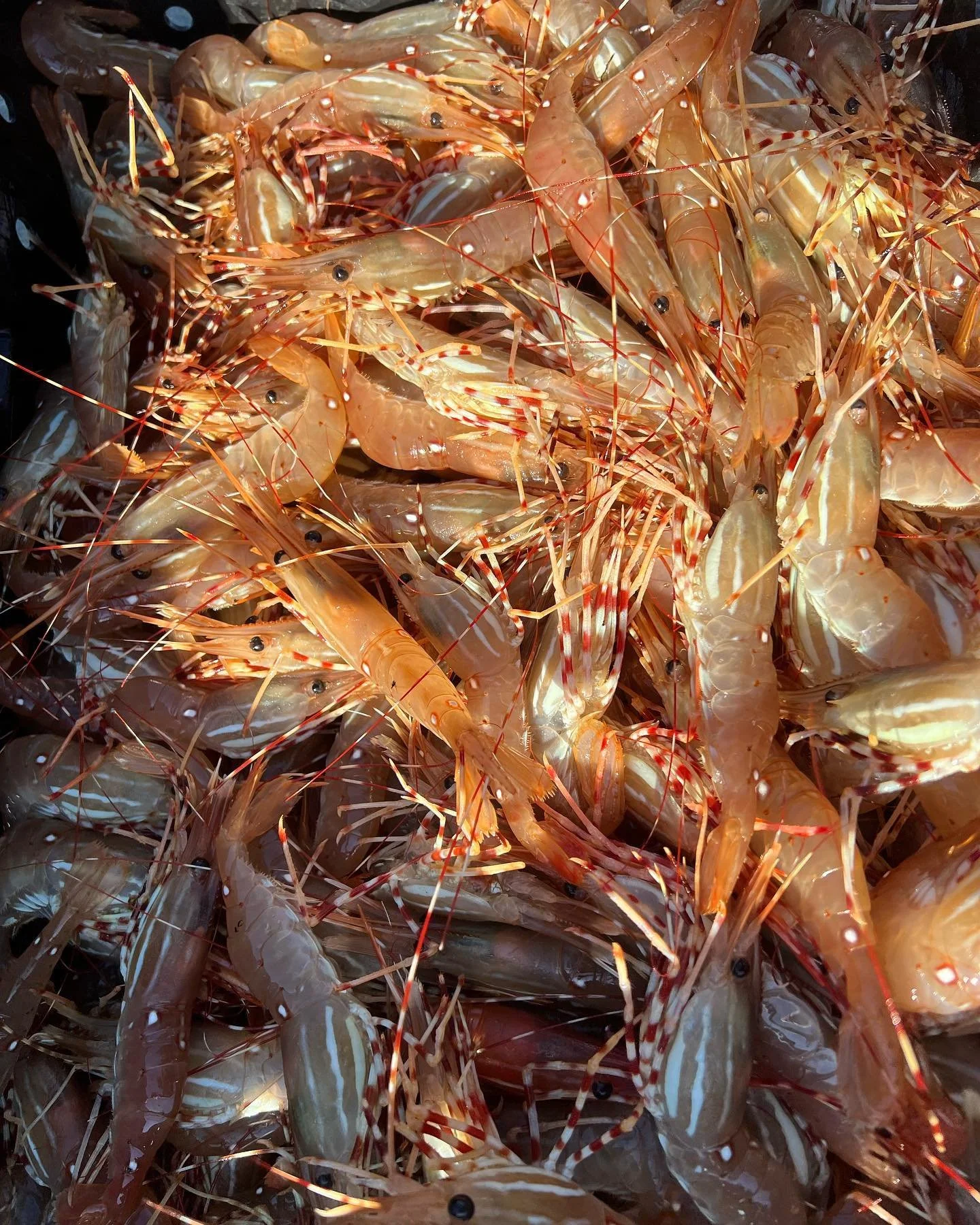
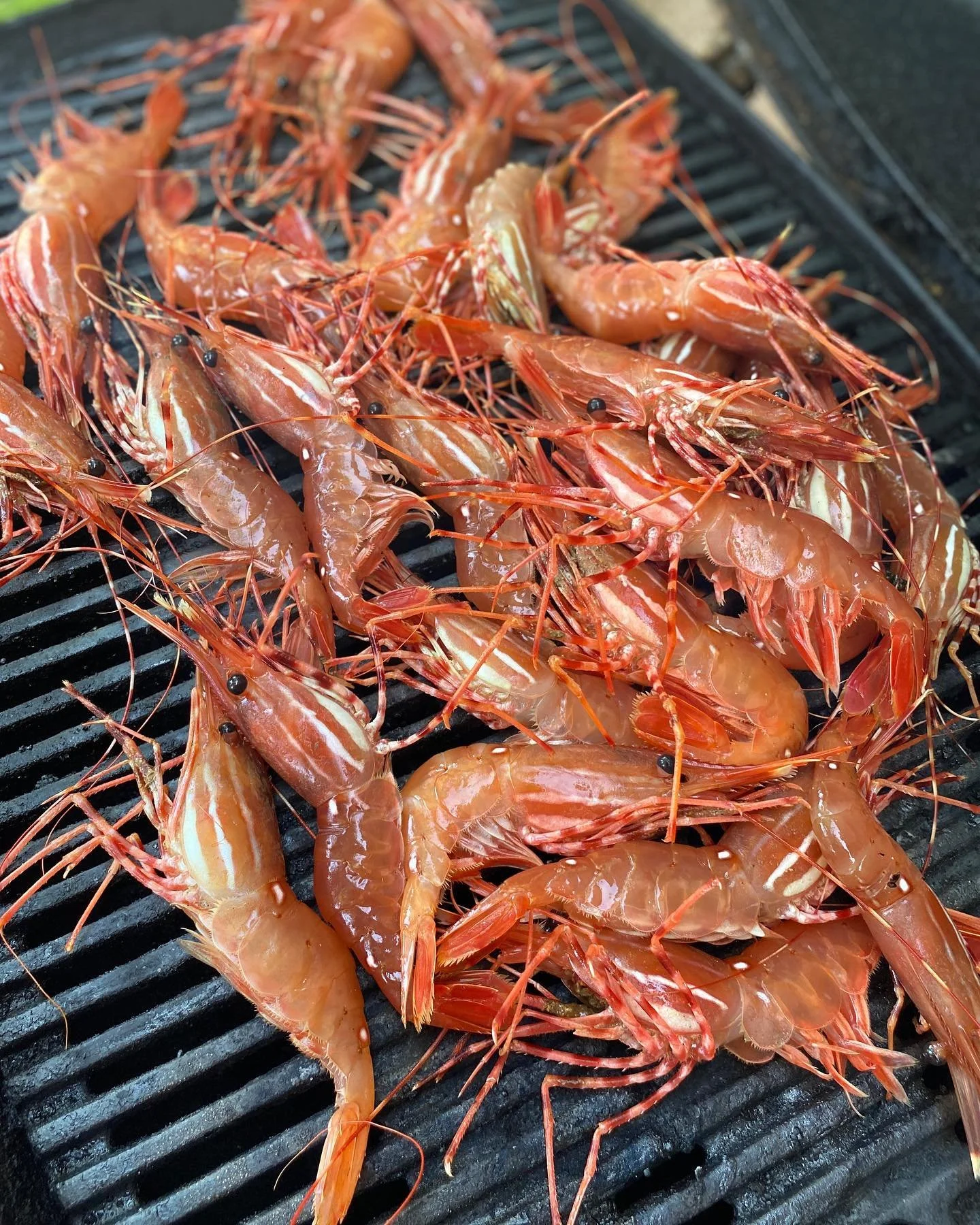
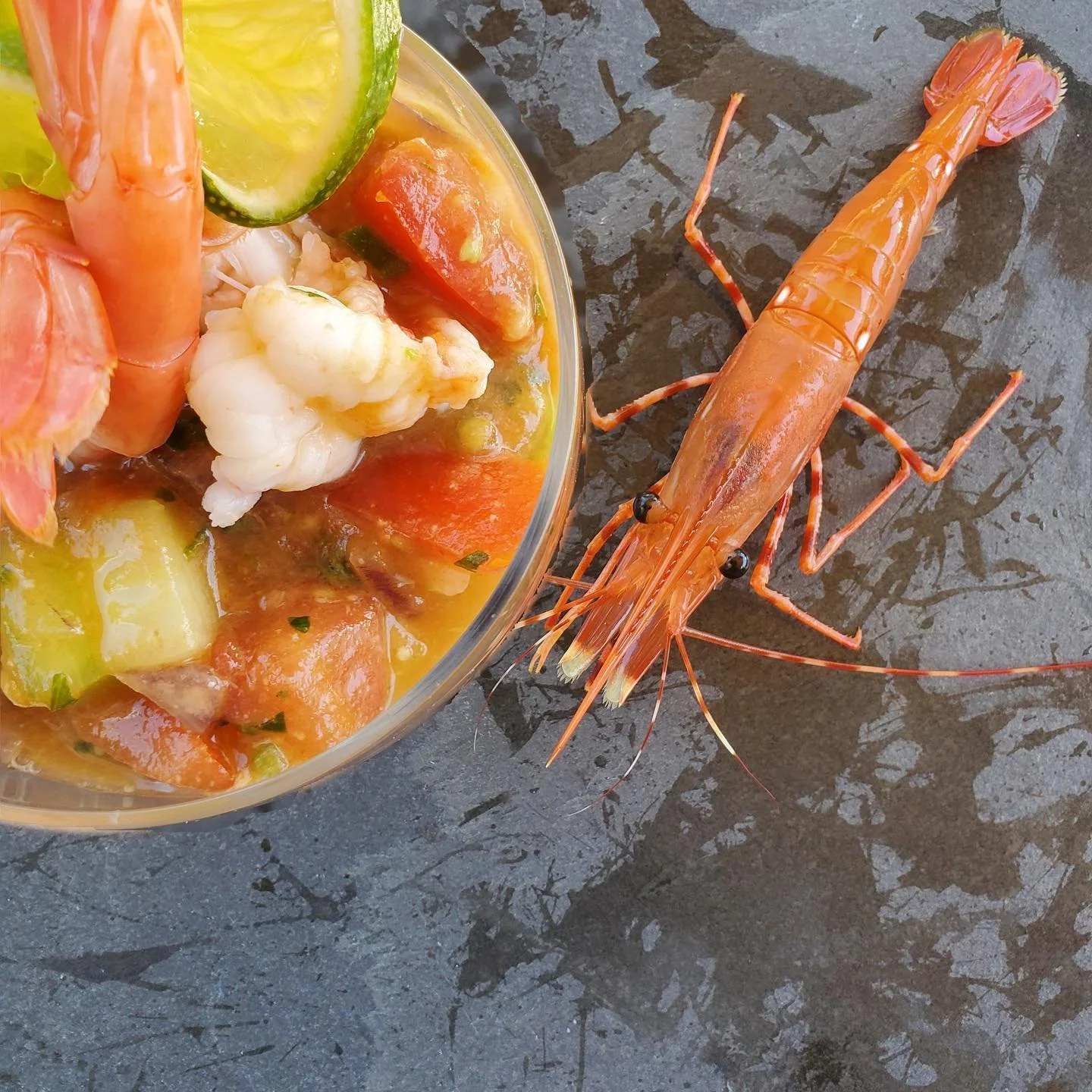
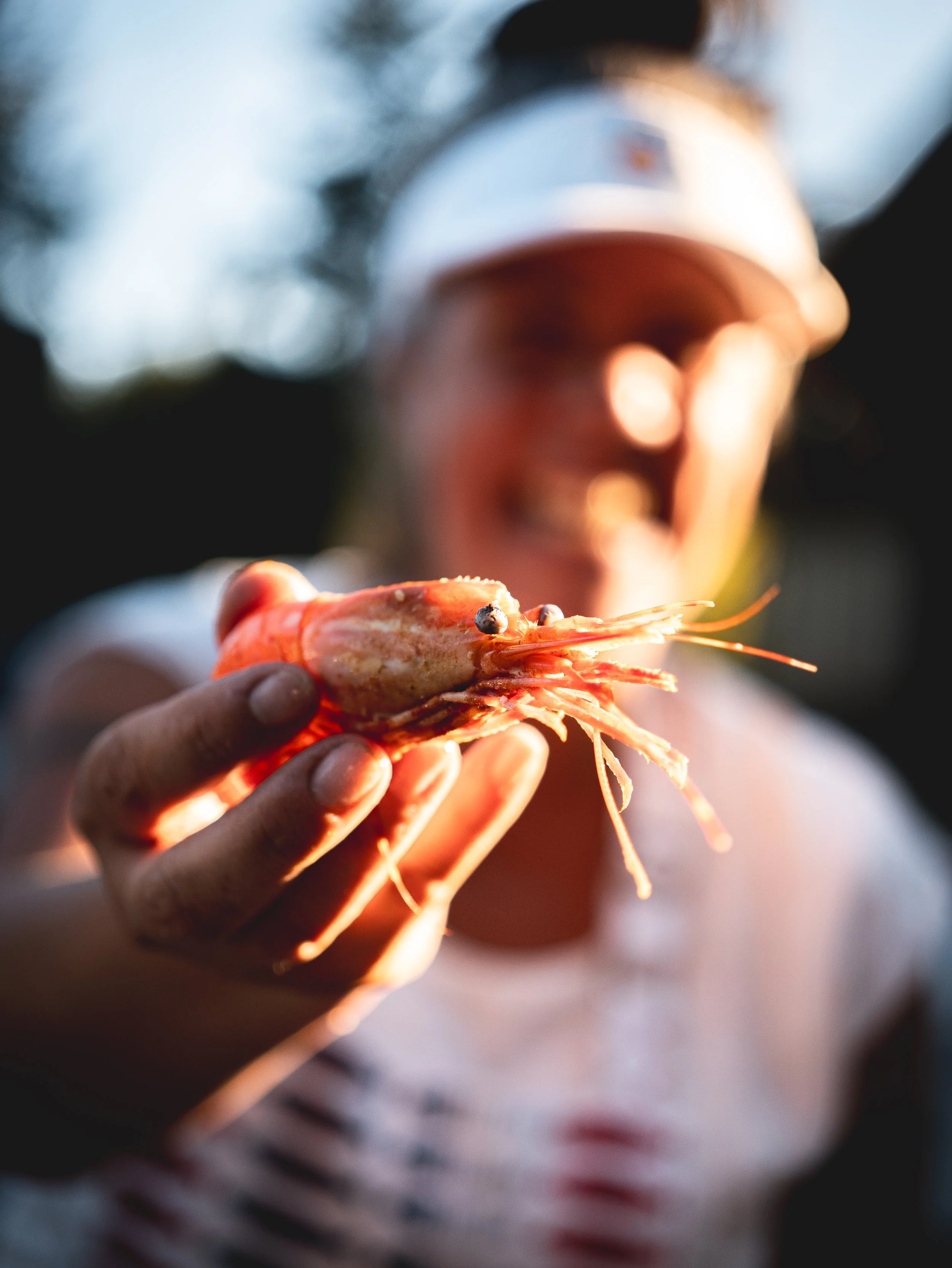
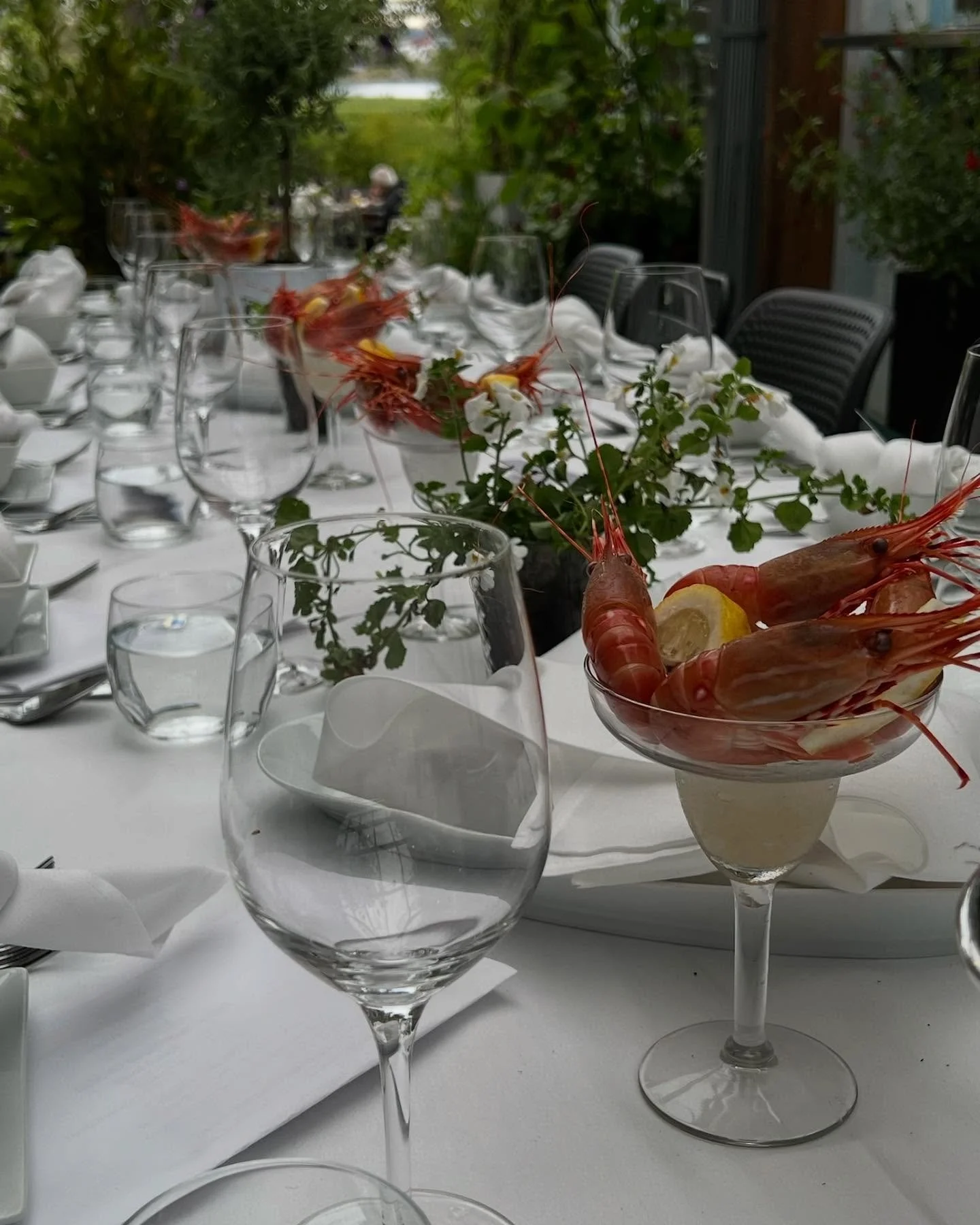
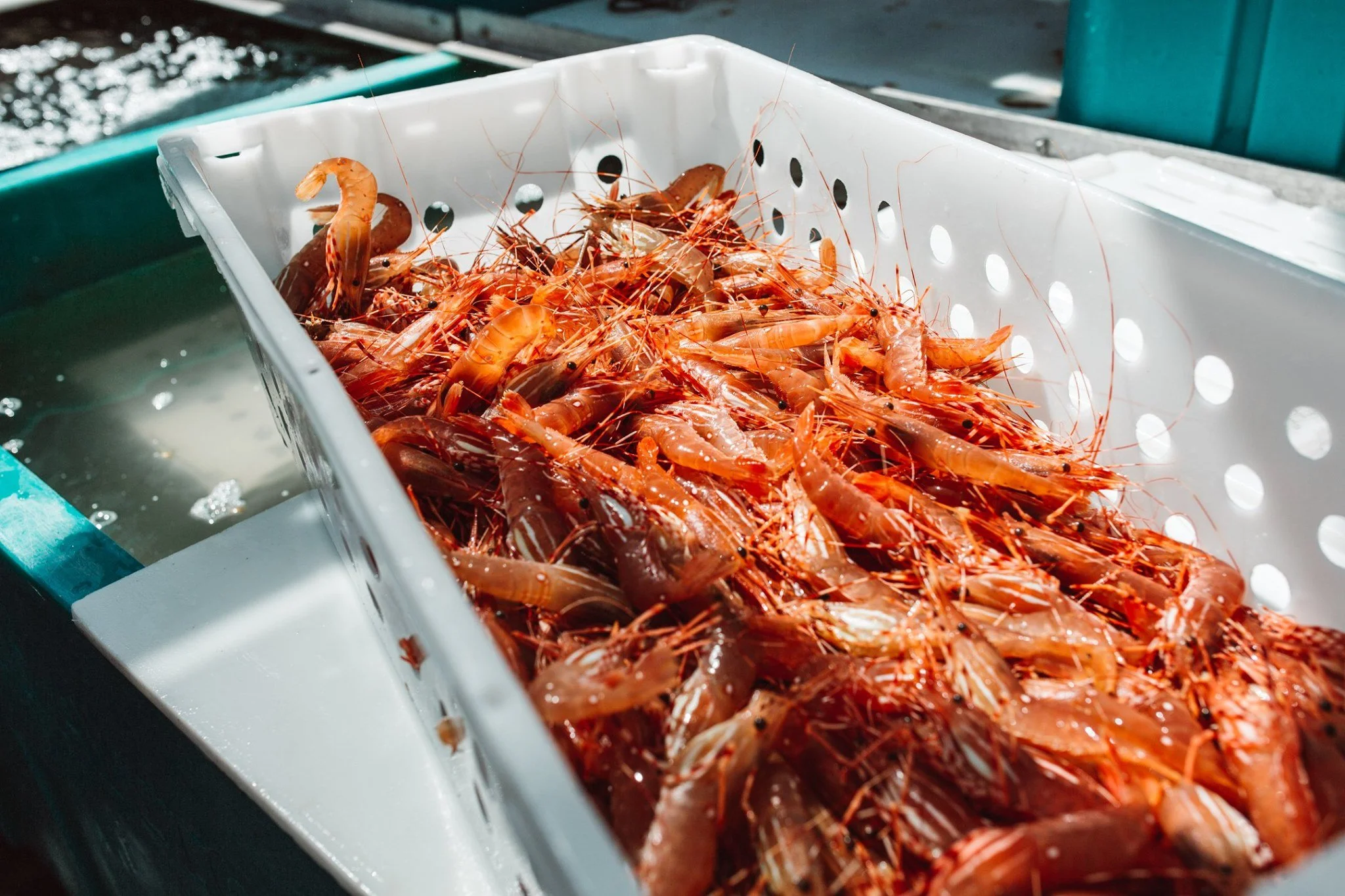
Spot prawns are the largest of the 7 species of shrimp that are commercially harvested here in BC waters. Though we refer to them as a prawn, they are biologically classified as shrimp. Spot prawns are prized here locally as well as overseas. They get their name from their distinctive white spots on their shell, two on each side. The other commercially sought-after species include Humpback, Sidestripe, Coonstripe or dock shrimp, spiny pink shrimp, smooth pink shrimp and flexed pink shrimp.
Spot prawns are hermaphrodites, starting their lives as male and turning female later in their life cycle. Spot prawns live on a four-year life cycle. They spend the first 2 years of their lives as males, and then the males reproduce once and gradually transition to females in the third year of their life cycle. After they transition, females will reproduce and they carry eggs for 6 months before they hatch.
The spot prawn season is on average 50 days long. The spot prawn fishery has been designed around the unique life cycle of the spot prawn, with harvesting occurring during the spring when the lowest number of egg-bearing females will be caught. Breeding occurs in the summer, egg bearing occurs in the fall and egg hatching occurs in the winter. The commercial fishing season is opened no earlier than May 1st to ensure that the prawns have time to grow large before the harvesting season begins.
Female spot prawns that carry roe are called ‘berried prawns’ due to the berry-like appearance of their small, brightly-coloured eggs. The monitoring of the count of spawning females plays a crucial role in fishery management, referred to as the Spawner Index. When numbers of egg-bearing females caught in traps fall below set levels, the fishery will start closing fishing areas. All berried spot prawns must be returned to the water as per British Columbia prawn fishery regulations. This ensures that the species can reproduce to protect the longevity of spot prawns here on our Pacific coast.
Between 80 and 90 percent of our BC spot prawn catches are exported to Asia as they are highly sought after for their unique texture and sweet flavour. Their taste is similar to that of Atlantic lobster; sweet and slightly briny. These prawns are caught in the wild by traps, making the fishery sustainable with minimal by-catch. The traps are made with mesh that have holes large enough for the prawns to enter the traps for bait, but too small for crabs and larger critters trying to enter these traps. Spot prawn traps are designed to lower the impact of ghost fishing. These traps open when their cords rot, preventing any critters from being trapped in unused fishing equipment. Spot prawns are also sorted one trap at a time to remove any by-catch, undersized or spawning prawns, which are immediately returned to the ocean.
Each line has 50 traps attached to it and they are tossed one at a time, and these traps can only be hauled up once per day. This haul must occur between the hours of 7am-7pm. The majority of spot prawns in BC are harvested between Vancouver Island and the mainland. A maximum of 300 traps can be set per harvester per day.
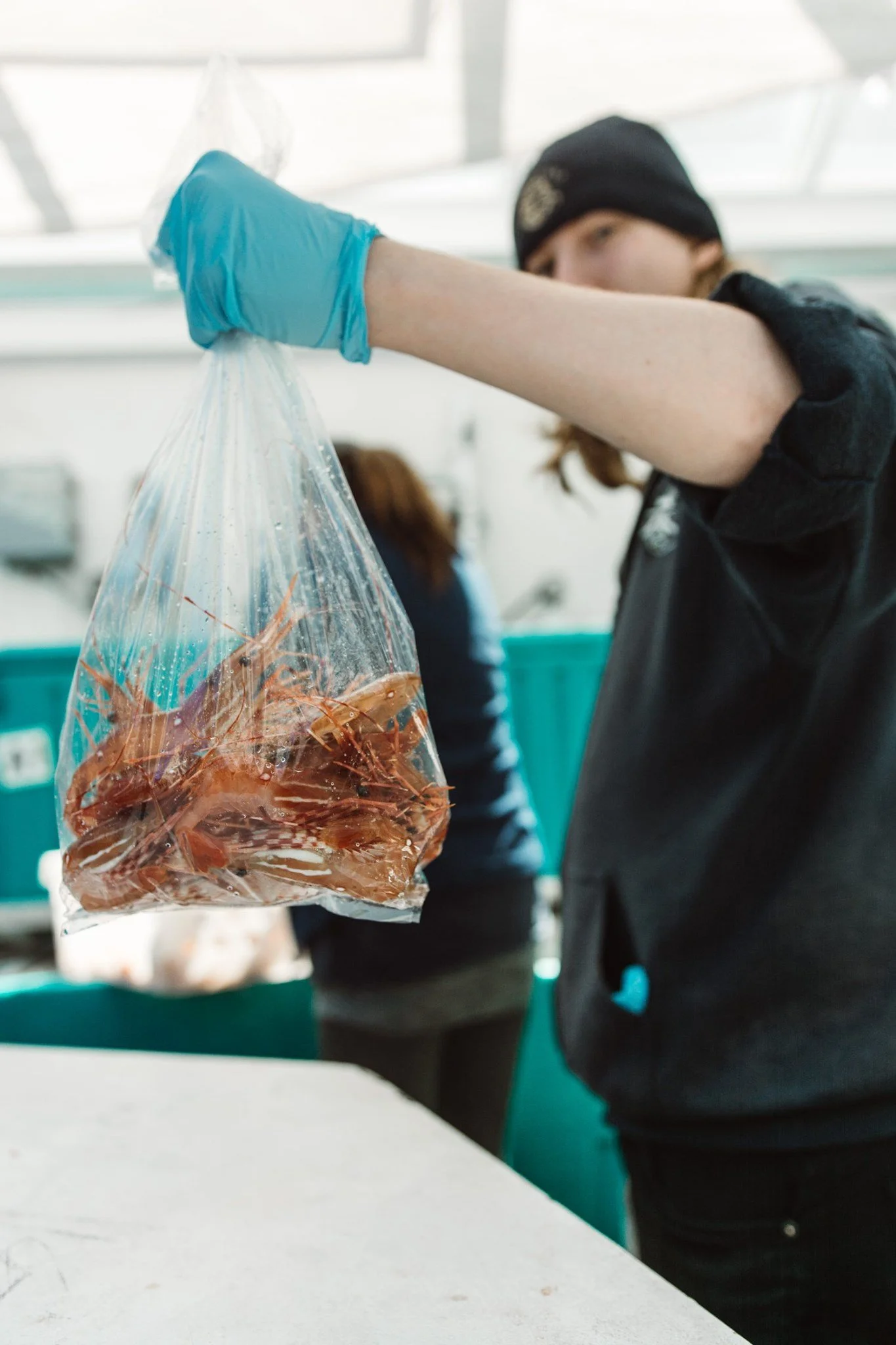
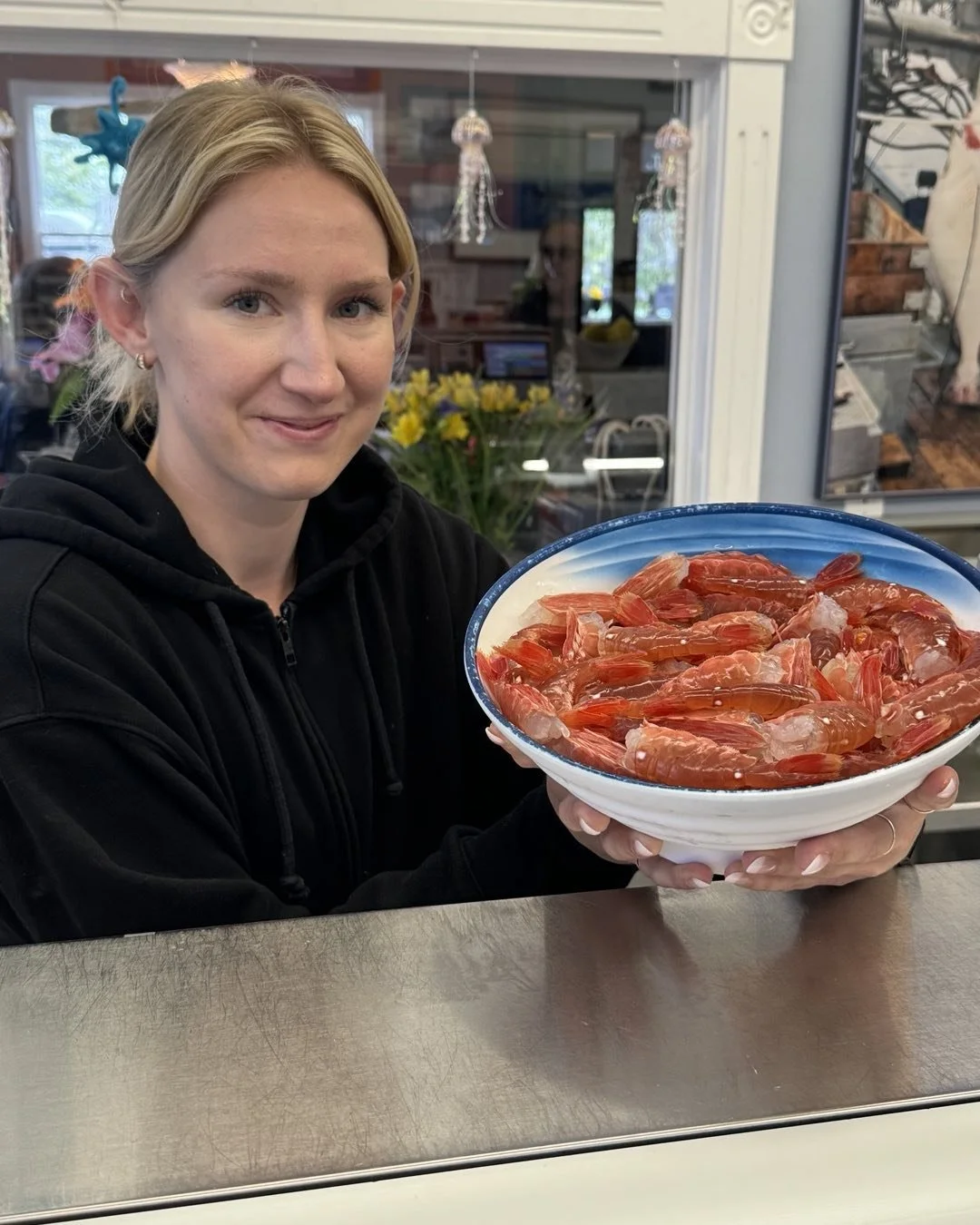
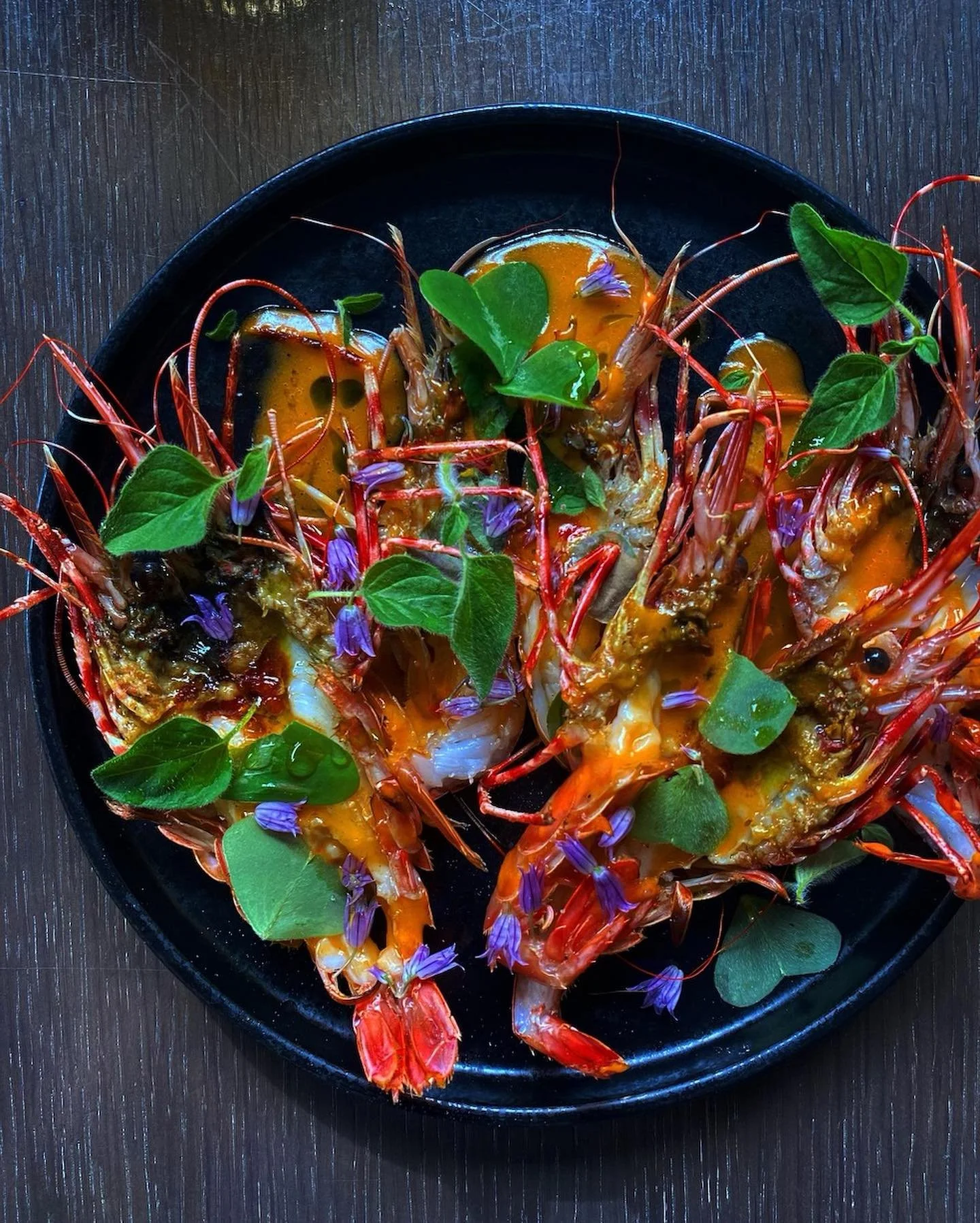
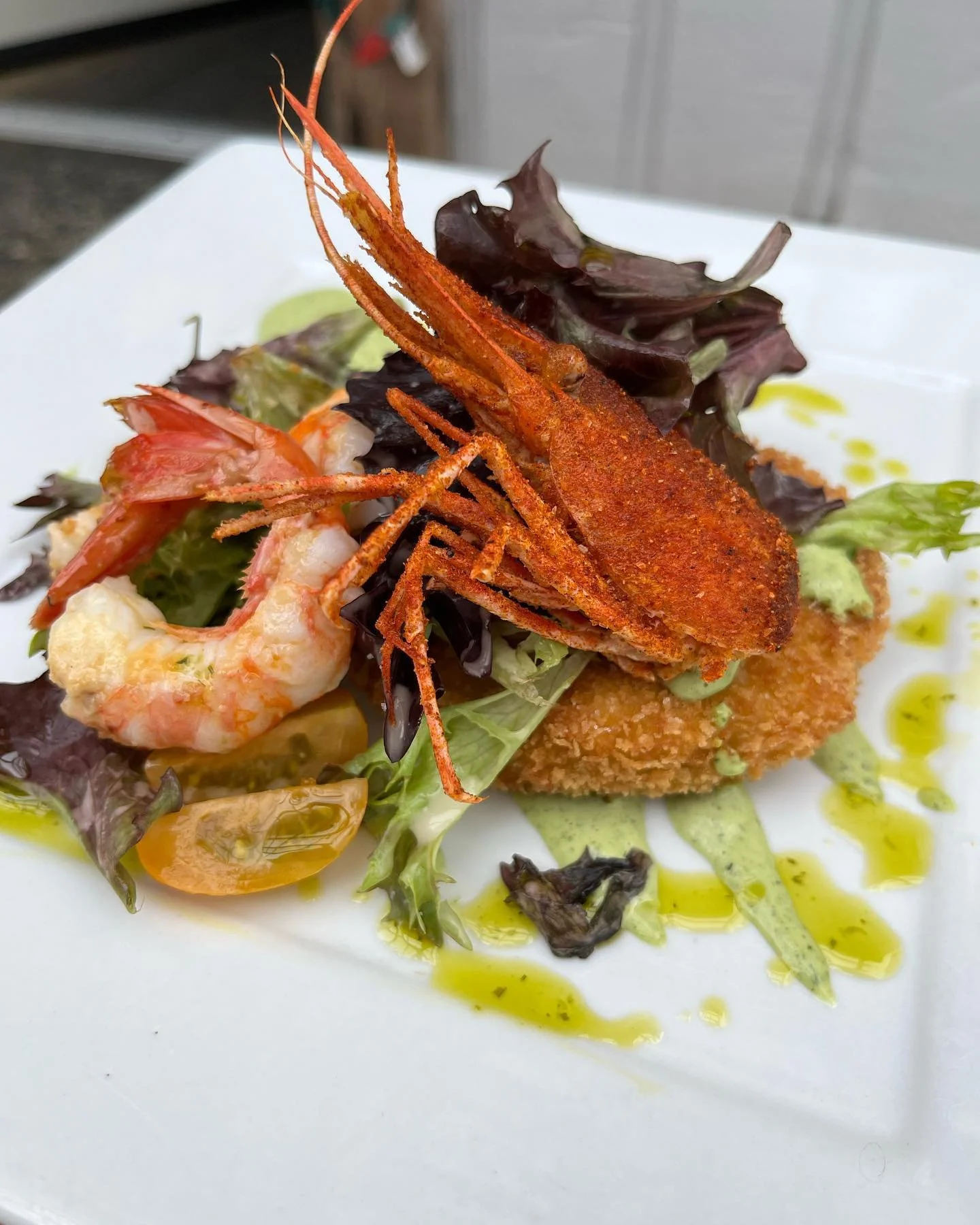
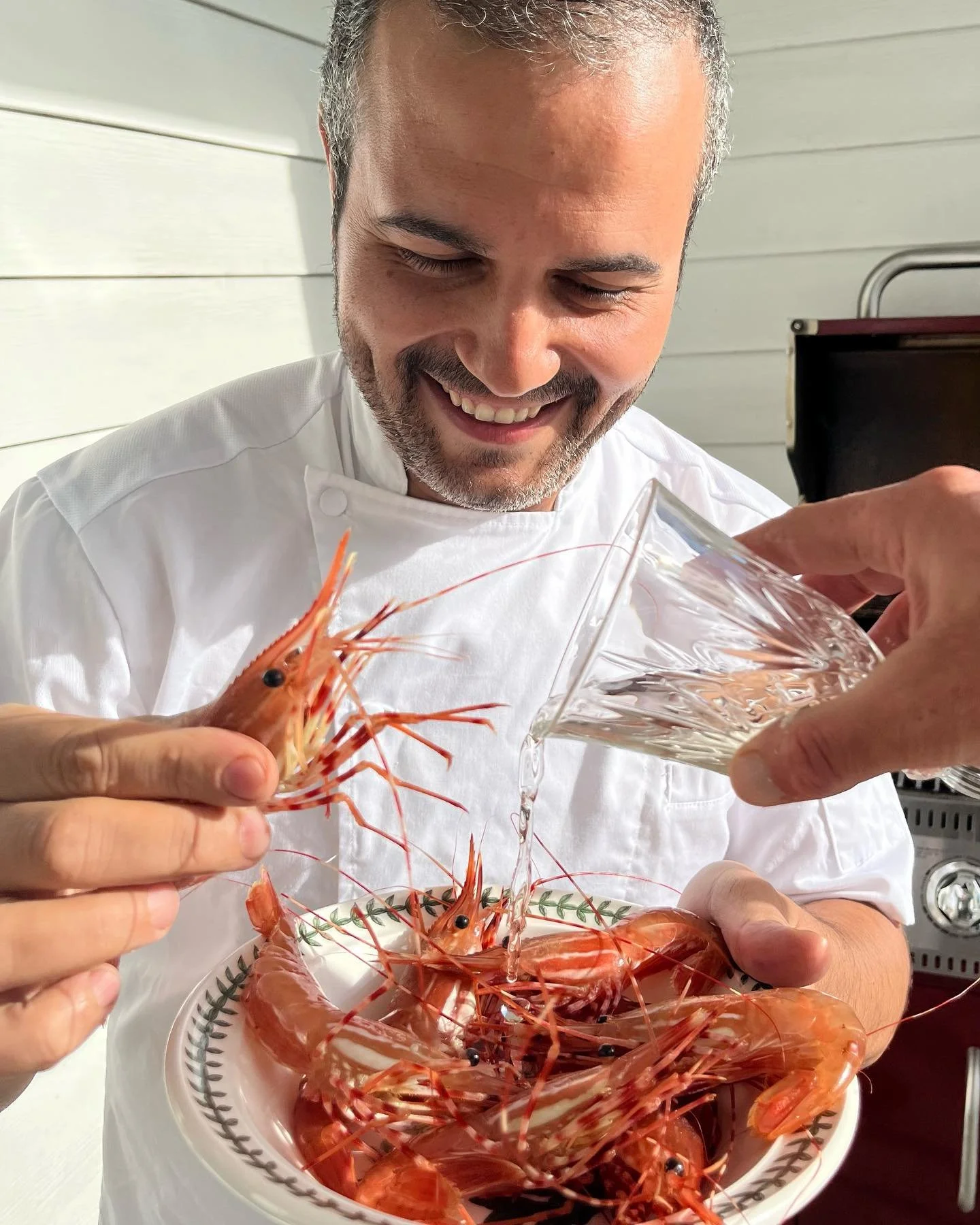
When you buy prawns, you want to look for lively prawns that appear lighter in colour, almost translucent. The reddish colour of some prawns can be due to them deteriorating in condition from exposure to oxygen. Your prawns should be firm to the touch when raw. Most fish sellers, including Finest’s retail counter, will sell prawns as either a live product or processed into tails. Live prawns are always a great option; they can be cooked whole or processed. The spot prawn heads make an excellent stock or bisque, and they can even be fried and eaten! The heads contain antioxidants, collagen, zinc and vitamins. Spot prawns themselves offer a great source of lean protein while containing Omega-3s, and they contain an antioxidant called astaxanthin which supports eye, skin, heart and muscle health.
Fresh spot prawns are best purchased the same day of cooking, especially when live, because they can spoil quickly. If the prawns die before you have cooked them or removed their heads, an enzyme called polyphenol oxidase found in the heads of the spot prawns, which is the same enzyme responsible for fruit browning, will break down the meat of the spot prawns and turn the heads black. This significantly reduces the quality of your spot prawns. If you will need to keep your live prawns for more than 4-6 hours in the fridge, we recommend taking the heads off. You can remove a spot prawn’s head by gripping the prawn’s body with one hand and twisting and pulling the head off with your other hand. Frozen spot prawns can be bought ahead of cooking, as we freeze them in sea water to protect the prawns from freezer burn. Thaw these by placing the container in a cold water bath, and they should be ready to cook in about an hour.
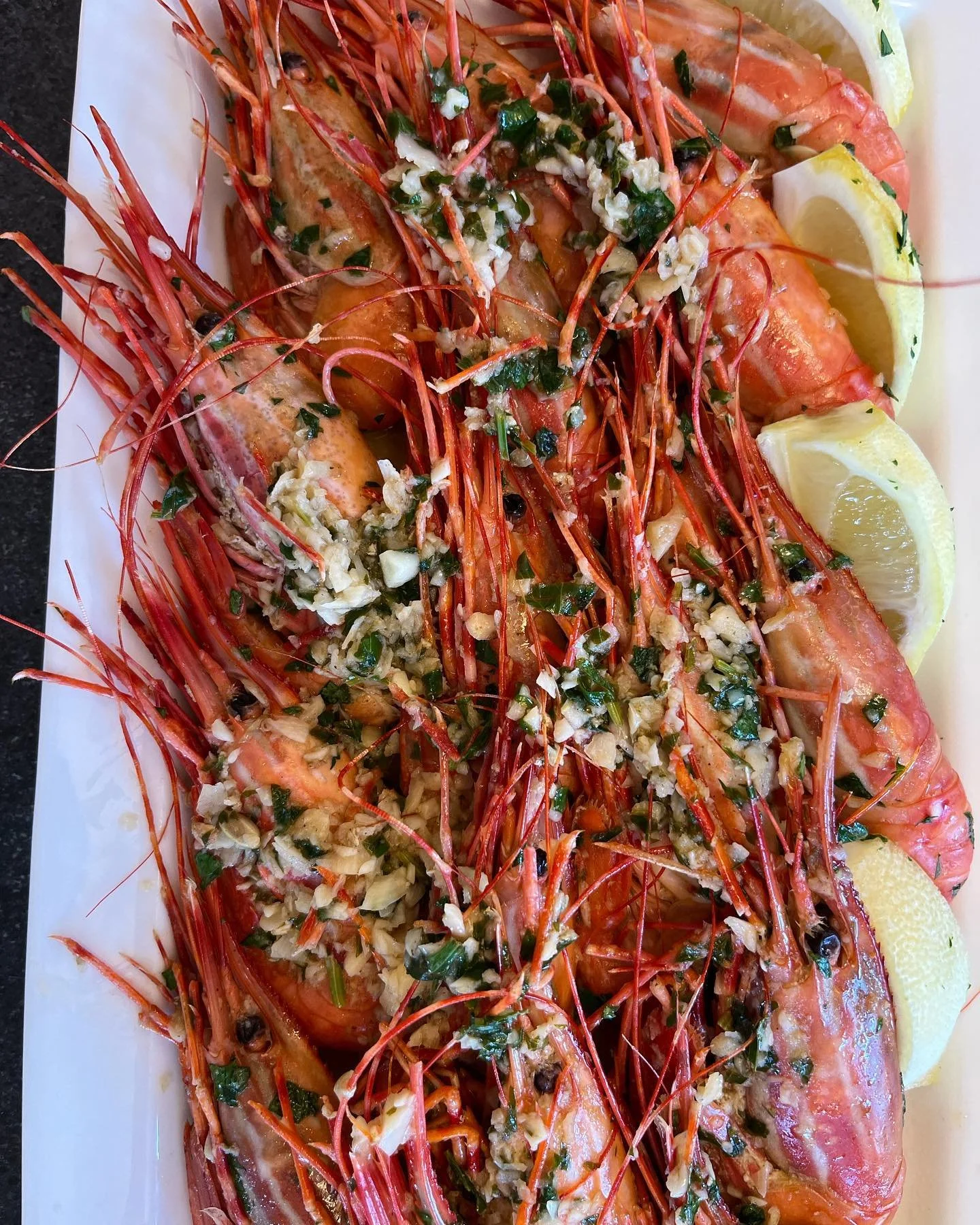
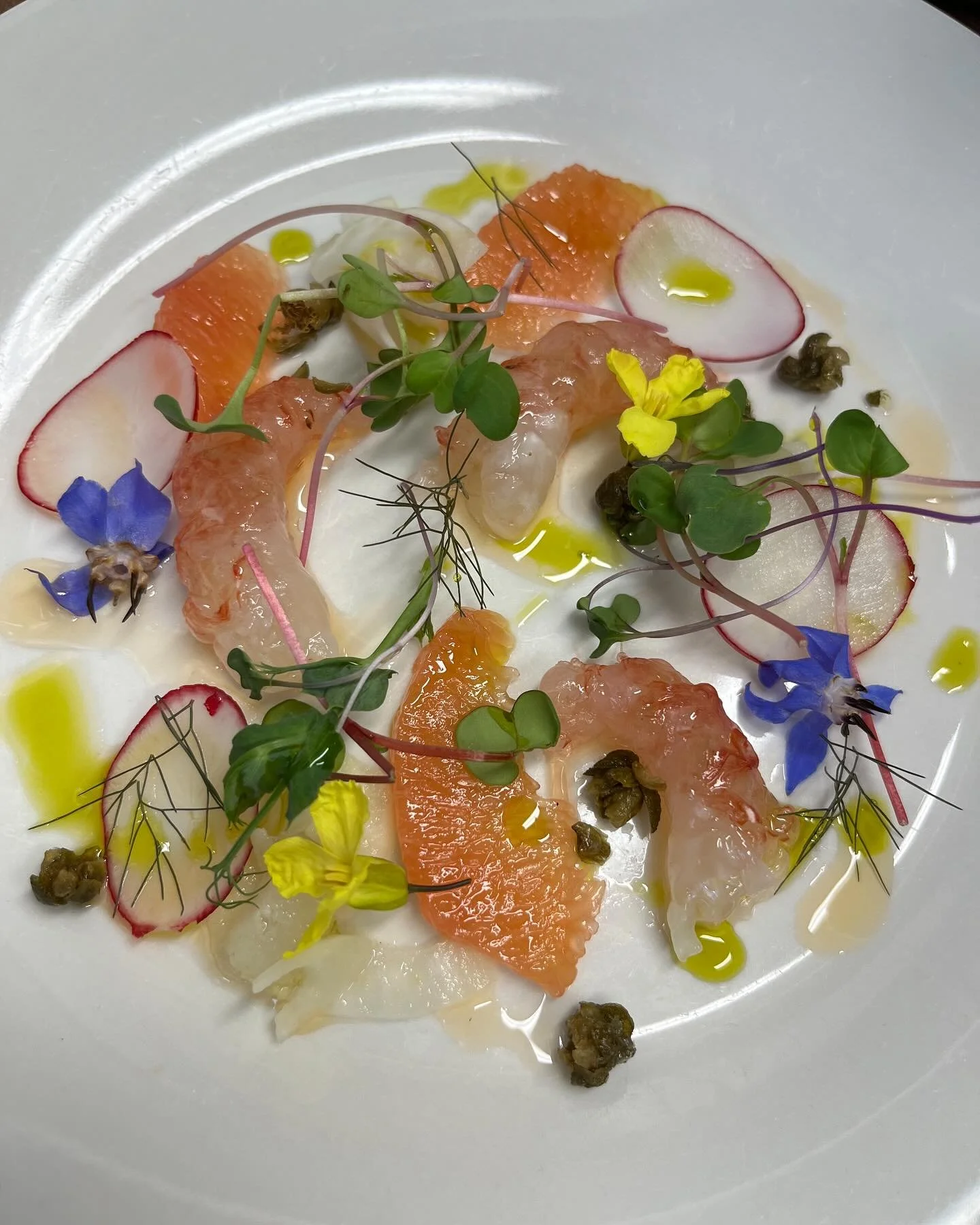
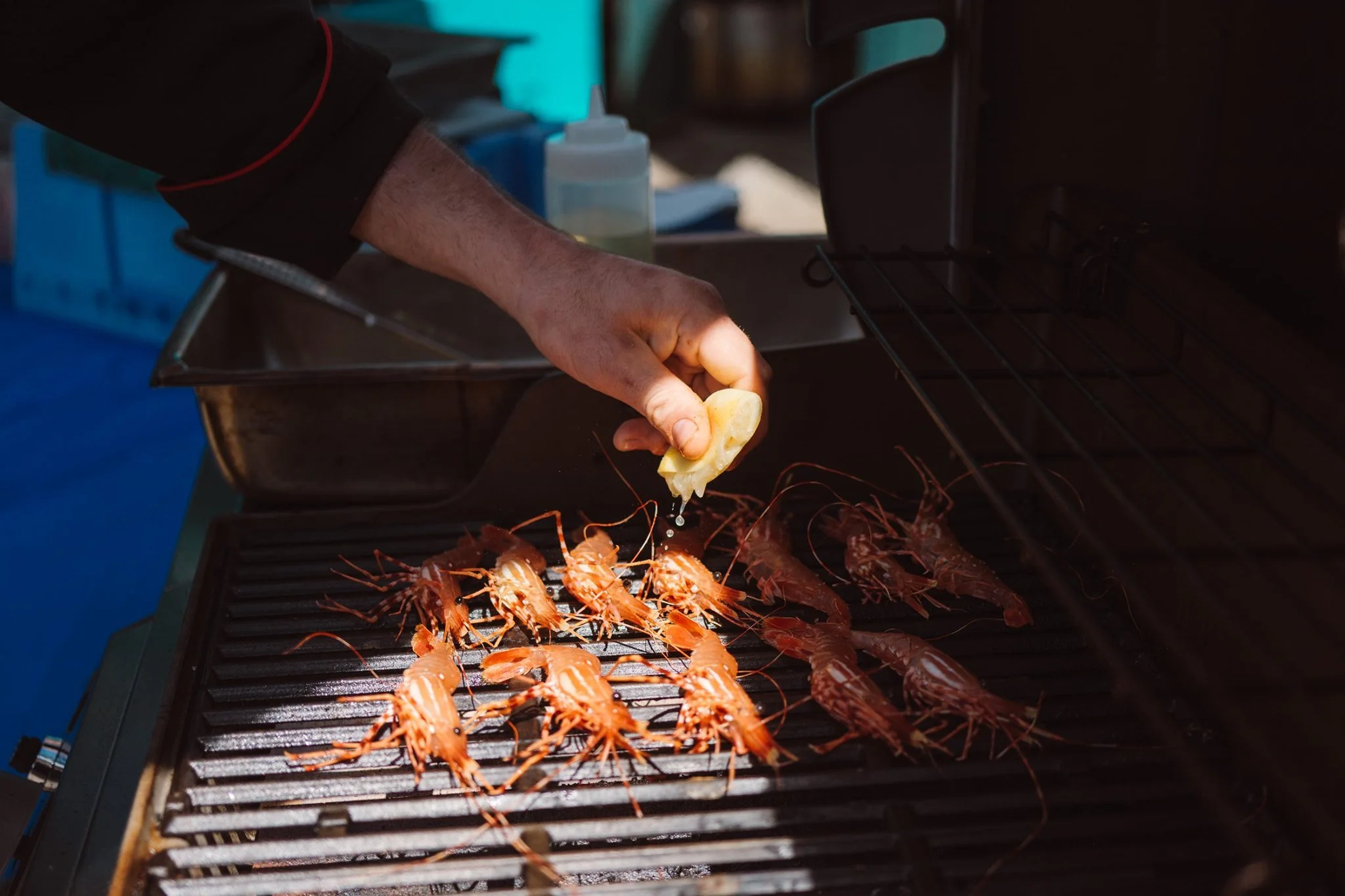
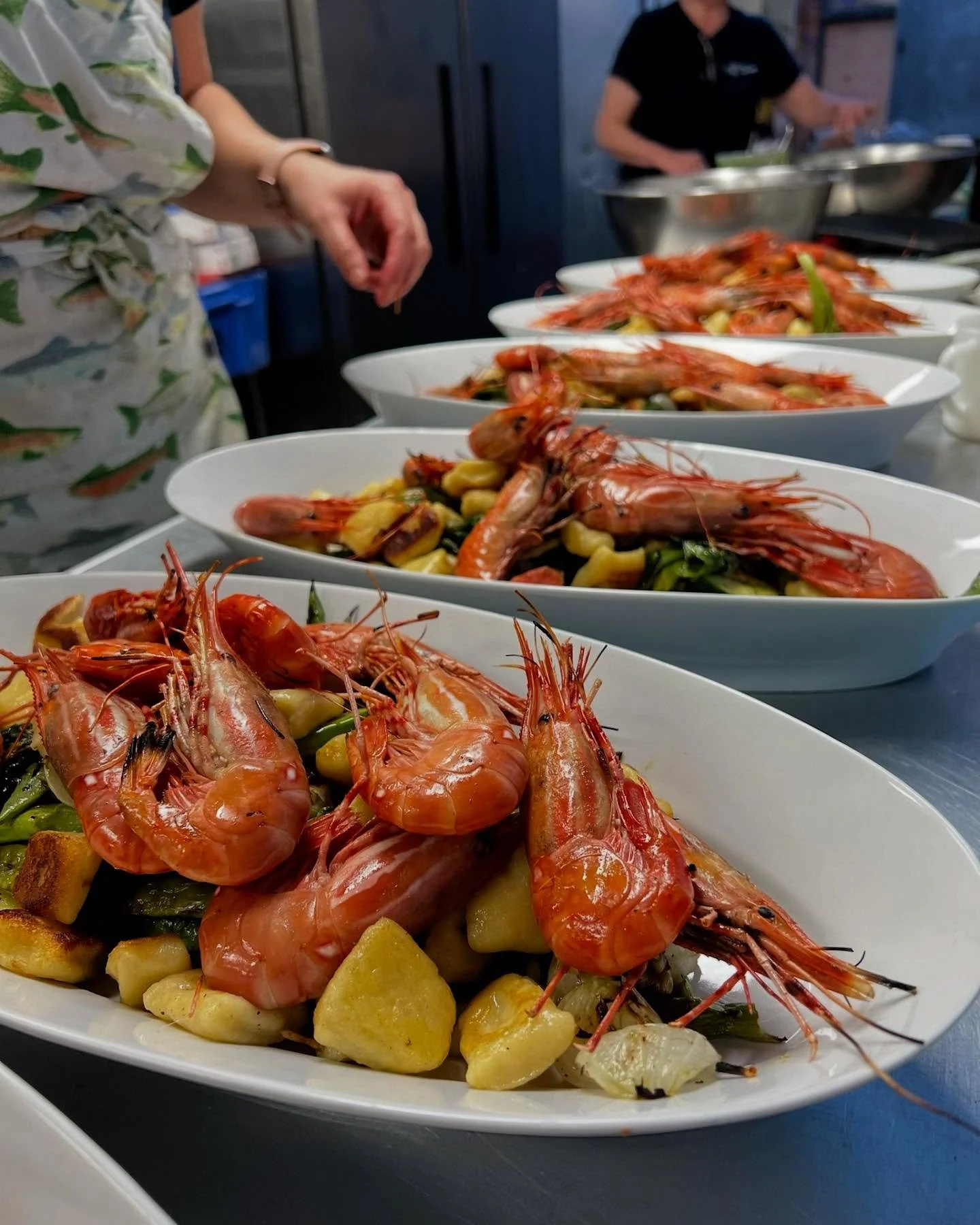
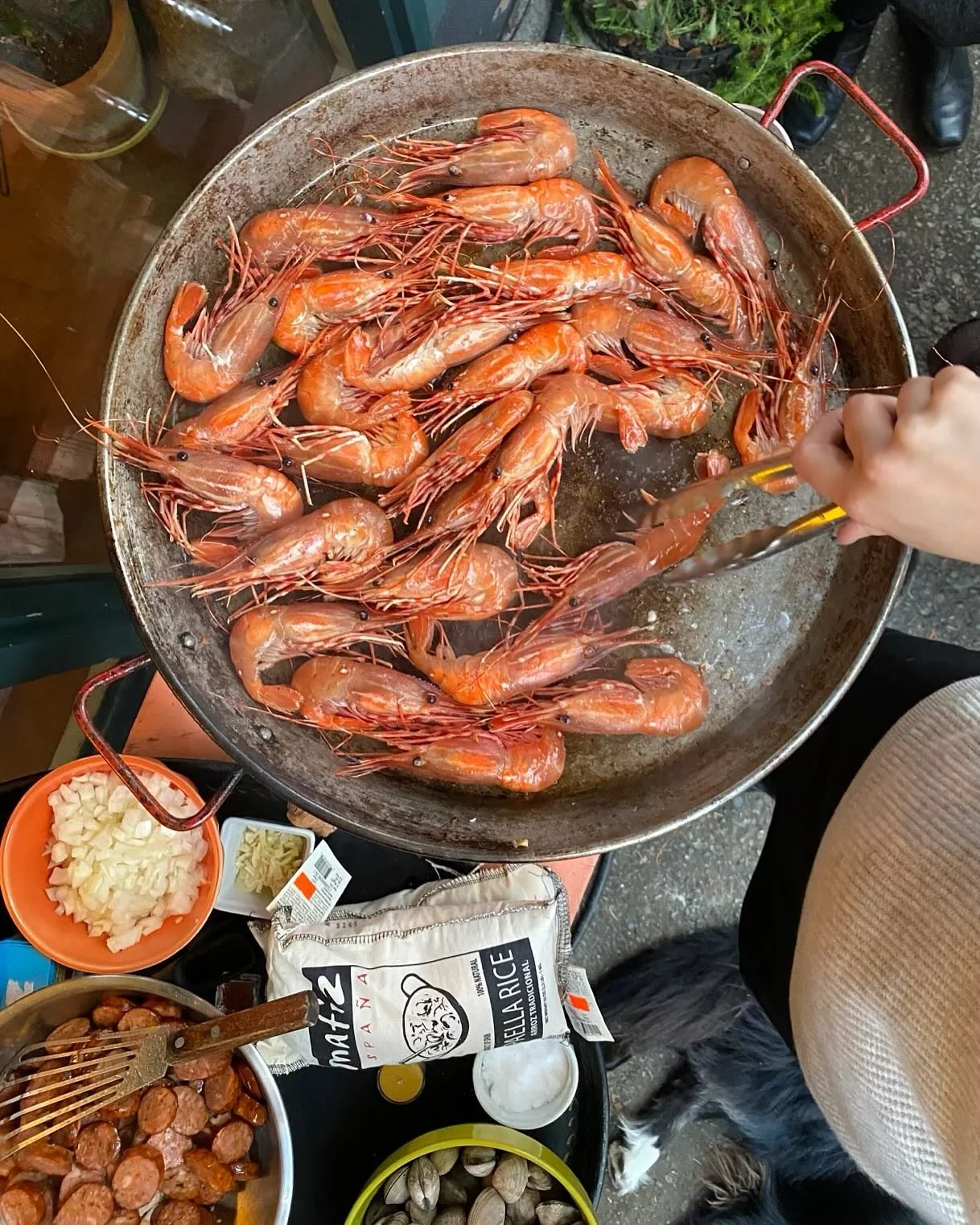
Spot prawns are best when cooked in the shell. The shell imparts its flavour onto the meat during the cooking process, as well as locking in moisture and protecting the delicate flesh from overcooking. Spot prawns are particularly prone to a mushy or rubbery texture when overcooked, and since they are wild, either fresh or frozen-at-sea can be eaten sashimi-style, so it's best to undercook these as opposed to overcooking. Spot prawns are cooked in 1-3 minutes, whether you like to pan-fry them in garlic butter, poach them, pour boiling broth over them or grill them. To make the peeling process easier, you can snip the spot prawn shells with kitchen shears down the back of their tail before cooking and the shells will peel much easier.
Finest at Sea hosts an epic spot prawn celebration every year during the season, bringing local chefs down to create signature spot prawn delicacies, live music, a bouncy castle and loads more fun! If you find yourself in Vancouver during the spot prawn season, check out the annual Spot Prawn Festival for bisque or brunch.